
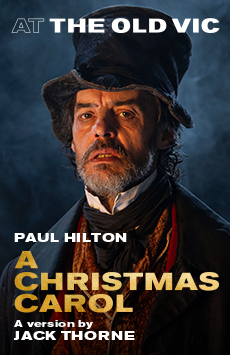
What happens in A Christmas Carol
The story is Dickens's familiar one, told in 110 minutes without an interval. Ebenezer Scrooge, a wealthy and miserly London moneylender, is visited on Christmas Eve by the ghost of his former business partner Jacob Marley, who warns him that he will be visited by three spirits. The Ghost of Christmas Past takes Scrooge back to his lonely school days, his early apprenticeship under the warm-hearted Mr Fezziwig, and his broken engagement to Belle. The Ghost of Christmas Present shows him the Cratchit family's modest Christmas dinner — with the dying Tiny Tim — and his nephew Fred's Christmas party. The Ghost of Christmas Yet to Come reveals Scrooge's lonely death, mourned by no-one. Scrooge awakens on Christmas Day, transformed, and spends the rest of the day distributing kindness and his fortune.
Jack Thorne's adaptation makes two structural additions to Dickens. First, the audience is involved physically: the cast walk among the audience handing out satsumas and mince pies before curtain, the choir sings carols throughout, and sprouts parachute from the ceiling at the Cratchits' dinner. Second, Thorne extends Scrooge's backstory: the production opens with the young Scrooge as a child, abandoned at boarding school by his unforgiving father — a sequence that makes the adult Scrooge's hardness feel inherited rather than chosen.
The play's emotional climax — Scrooge's encounter with the Cratchits and Tiny Tim — is staged with the entire company singing and the audience invited to participate. By the closing carol most performances finish with the audience in tears.