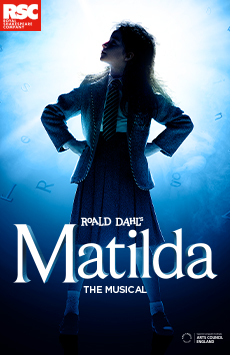
What happens in Matilda?
Matilda Wormwood is a five-year-old genius born into a family that hates books. Her father Mr Wormwood is a dodgy second-hand car dealer who calls his daughter "boy"; her mother Mrs Wormwood is consumed by ballroom dance competitions; her brother Michael is glued to the television. Matilda, who taught herself to read at three and has worked through most of the public library by five, copes by escaping into stories.
An act of rebellion
The show's first big number, "Naughty," establishes Matilda's central principle: if the system is unjust, sometimes you have to be a little bit naughty to fix it. She begins by quietly sabotaging her father — peroxide in his hair dye, glue in his hat. Tim Minchin and Dennis Kelly take what could be slapstick and turn it into something more interesting: Matilda decides her own story rather than waiting for one to happen to her.
Crunchem Hall
Matilda starts school under the kind eye of Miss Honey, who immediately recognises her brilliance. But the headmistress is the terrifying Miss Trunchbull — former hammer-throwing champion, current child-hater. Trunchbull runs Crunchem Hall as a personal fiefdom. The "Chokey," the "School Song," the cake-eating punishment of poor Bruce Bogtrotter — these are the deliberately grotesque set pieces that define the school sequences, played for laughs and genuine menace at once.
Miss Honey's story
Matilda discovers that Miss Honey was raised by Trunchbull (her aunt) after her father's mysterious death, and that Trunchbull stole both Miss Honey's inheritance and her childhood home. The "Quiet" sequence — in which Matilda's hidden powers begin to manifest as the world around her stops — is one of the show's most beautiful moments. The story Matilda has been telling Mrs Phelps in the library, about the Acrobat and the Escapologist, turns out to be Miss Honey's parents' story.
Revolting children
Matilda's confrontation with Trunchbull, using her telekinetic powers to write Miss Honey's father's name on the board, drives Trunchbull from the school. Miss Honey reclaims her home and adopts Matilda, whose own parents are fleeing Russian gangsters. The closing number, "Revolting Children," gives the kid ensemble the biggest celebration of agency in modern musical theatre — a celebration of what happens when children stop being told and start telling.
How Matilda got here
Roald Dahl's 1988 novel
Matilda was Roald Dahl's last great novel for children, published in 1988 — written when he was in his early seventies and at the height of his powers. The book has the deliberately gleeful nastiness that defines Dahl's later work, balanced by genuine warmth toward its child protagonist and her teacher. Danny DeVito directed a 1996 film adaptation starring Mara Wilson. The novel sold tens of millions of copies and remains one of the most-checked-out children's books in libraries worldwide.
The RSC commission
The Royal Shakespeare Company commissioned the musical adaptation in 2008, with Tim Minchin (then best known as a stand-up comedian and pianist) writing music and lyrics, Dennis Kelly writing the book, and Matthew Warchus directing. Minchin was an unusual choice — and the result was unusual: a score that took children's theatre seriously enough to write difficult, lyrically dense songs for it. The musical premiered at the RSC's Courtyard Theatre in Stratford-upon-Avon on 9 November 2010.
West End opening, 2011
Matilda transferred to the Cambridge Theatre, opening on 25 October 2011 (previews from 24 October). The reviews were unanimously rapturous — five stars from The Guardian, The Telegraph and several other major publications. At the 2012 Olivier Awards Matilda won seven awards, the largest haul for a musical at that ceremony at the time. Bertie Carvel's Miss Trunchbull was singled out as one of the central performances of the West End decade.
Broadway and beyond
Matilda transferred to Broadway in 2013, winning four Tony Awards including Best Book of a Musical. International productions opened in Australia, North America (national tour), South Korea, the Philippines, and elsewhere. The Broadway production closed in 2017 after a successful run; the London production has continued at the Cambridge without interruption.
The 2022 Netflix film
A film version of the stage musical — directed by Matthew Warchus, written by Dennis Kelly, with songs from Tim Minchin's stage score plus several new ones — opened in UK and Irish cinemas on 25 November 2022 and worldwide on Netflix on 25 December 2022. Emma Thompson played Trunchbull; Lashana Lynch played Miss Honey; Alisha Weir played Matilda. The film expanded the show's audience significantly and drove a noticeable uptick in West End ticket sales.
The 5,000-performance milestone
In late 2024 Matilda passed 5,000 West End performances, becoming the tenth longest-running musical in West End history. The show is now in its 15th continuous year at the Cambridge Theatre. The current cast led by Emilia Shefford joined in stages from 2024–25, with Sithuni Gamage, Bonnie Harper, and Carla Lopez-Corpas added from 17 March 2026.
Performance schedule
- Currently booking until: 17 January 2027
- Evenings: Tuesday to Saturday, 7pm (Saturday evenings sometimes 7:30pm)
- Matinees: Wednesday and Saturday at 2pm (Saturday matinees sometimes 2:30pm); Sunday at 3pm
- Running time: Approximately 2 hours 35 minutes, including one 20-minute interval
Schedule may vary around bank holidays and across school terms — confirm specific dates and start times when booking.
Age guidance and content
Recommended for ages 6 and above. Children under 4 are not admitted to the auditorium. Every child must occupy their own seat — including babes-in-arms.
Matilda preserves the deliberately grotesque comedy of Roald Dahl's novel. Miss Trunchbull's cruelty toward children — the Chokey, the cake-eating scene, the hair-pulling — is played for laughs but is genuinely intense. Most six-year-olds handle the show without difficulty; very sensitive younger children may find some moments unsettling. The production also includes loud sound effects and moments of theatrical darkness.
Tickets and pricing
Matilda tickets typically range from £39 to £162, depending on seat, performance, and time of year. London Theatre Hub recommends booking through LOVEtheatre, our official partner.
Affordable access: The official Matilda lottery offers £30 tickets for every Monday-to-Sunday performance, drawn daily except Thursdays — entered via the show's official website. The Royal Shakespeare Company's Entry Pass scheme offers £10 tickets for those aged 16-25.
Cast (current 2026 company)
- Emilia Shefford as Matilda (also: Frozen, Mrs Doubtfire)
- Sithuni Gamage, Bonnie Harper, Carla Lopez-Corpas as Matilda (joining from 17 March 2026)
- Jon Robyns as Miss Trunchbull (also: The Great Gatsby, The Phantom of the Opera)
- Eve Norris as Miss Honey (also: Groundhog Day, Bat Out of Hell)
- Neil McDermott as Mr Wormwood (also: Pretty Woman, The Sound of Music)
- Tiffany Graves as Mrs Wormwood (also: Chicago, 101 Dalmatians)
- Tania Mathurin as Mrs Phelps (also: Mary Poppins, Come From Away)
Cast information correct at time of publication. The roles of Matilda, Bruce, Lavender, Nigel, Hortensia, Eric, Tommy, Alice, and Amanda rotate between multiple young performers — the producers do not guarantee the appearance of any specific performer at any specific show.
Creative team
- Music & lyrics: Tim Minchin
- Book: Dennis Kelly (based on the novel by Roald Dahl)
- Director: Matthew Warchus
- Choreography: Peter Darling
- Set & costume design: Rob Howell
- Lighting design: Hugh Vanstone
- Sound design: Simon Baker
- Illusions: Paul Kieve
- Orchestrations & additional music: Christopher Nightingale
Getting there
- Tube: Covent Garden (Piccadilly line) — 3 min walk
- Alternative: Leicester Square (Piccadilly, Northern; 5 min), Tottenham Court Road (Central, Northern, Elizabeth; 7 min)
- Bus: Routes 14, 19, 24, 29, 38, 176 stop on Charing Cross Road and Shaftesbury Avenue
- Parking: Q-Park Covent Garden (Parker Street) — 4 minute walk
About the Cambridge Theatre
The Cambridge Theatre at the heart of Seven Dials opened in 1930, designed by Wimperis, Simpson and Guthrie. The auditorium has approximately 1,231 seats across stalls, dress circle, and upper circle. Originally a venue for revues and short runs, it was Grade II listed in 1999 and has been the home of Matilda since October 2011 — by far the longest and most successful production in the theatre's history. The intimate Art Deco interior suits the show's child-scaled stagecraft particularly well.
Accessibility
The Cambridge Theatre offers wheelchair-accessible seating in the stalls with step-free access from the main entrance, hearing assistance systems, and accessible toilet facilities. Wheelchair spaces and adjacent companion seats are limited — contact the access line in advance to book and confirm specific requirements. Captioned, audio-described, BSL-interpreted, and relaxed performances are scheduled periodically through the year.
Producers
Matilda The Musical is produced by the Royal Shakespeare Company and the Dodgers (André Ptaszynski, Royal Shakespeare Company). The musical was commissioned by the RSC in 2008, premiered at the RSC's Courtyard Theatre in Stratford-upon-Avon in November 2010, and transferred to the Cambridge Theatre in October 2011, where it has run continuously since.