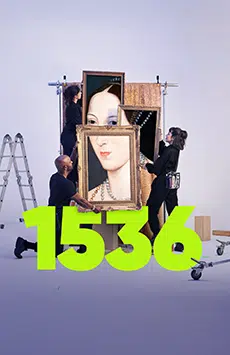
What happens in 1536?
Three women — Anna, Jane, and Mariella — meet in a field in rural Essex, the same place they used to gather as girls. They're unmarried in a society where a woman's survival depends on the men she's tied to: her father, then her husband. They're hungry for news from London, and what they get carries more weight than any of them realise.
News from court
Word arrives of the worsening conflict between Henry VIII and his queen, Anne Boleyn. The court drama is entertainment for these women, but it's also a warning. If a queen can be brought down on rumour and accusation, what protection does anyone else have? The conversations move between gossip, dread, and a grim kind of recognition.
Closer to home
As the royal scandal escalates, a smaller rumour begins to circulate locally. The mechanics start to feel familiar. Gossip travels the same way. Accusations land the same way. Women are blamed the same way. What looked like distant court politics turns out to be a pattern playing out in their own village.
The cost of survival
The play examines how violence against women functions as a system rather than a series of accidents. Whether you're a queen or a country girl, your body is treated as territory in someone else's argument. The women navigate threat, accusation, and shifting alliances, all while trying to hold onto whatever friendship they have left.
Can solidarity survive?
1536 keeps returning to a single question: can women stay loyal to each other when the system rewards them for not being? Friendship under that kind of pressure isn't a given — it's a choice, made over and over, often at real cost. The play doesn't offer comfortable answers.
Why 1536?
Anne Boleyn's execution
1536 is the year Henry VIII had his second wife executed on charges of adultery, incest, and treason — accusations modern historians overwhelmingly consider fabricated. When Henry decided he wanted a different queen, the legal and political machinery of the court produced the evidence required. Anne was beheaded on 19 May 1536. Her fall is one of the clearest demonstrations in English history of how power, when it wants something, finds a way to take it.
Gender and power in Tudor England
Tudor women lived inside strict hierarchies that defined their value entirely through their relationships to men. Even queens held power conditionally — granted, then withdrawn, when convenient. For women without rank, the conditions were harsher and the protections fewer. Anne's rise and fall is the visible version of a story that played out, less spectacularly, across the country.
The role of gossip
In 1536, reputation was infrastructure. Without modern media, information moved through networks of speech, and those networks did real work — they validated marriages, ended them, made fortunes, and ruined lives. For women specifically, sexual reputation was decisive. An accusation, true or invented, could be enough.
Why this play, now
Pickett wrote 1536 in response to the steady drumbeat of contemporary news stories about violence against women. The historical setting isn't escape — it's perspective. Stripped of the present's defensiveness, the patterns become easier to see. The play argues that the mechanics destroying Anne Boleyn never went away. They adapted.
Ava Pickett's approach
Pickett has said the play came out of a frustration with how routinely violence against women is treated as inevitable. The Tudor frame is a way to defamiliarise something audiences are exhausted by, and to let them see it again. The deliberate anachronism in the dialogue — the sweary, modern voices in 16th-century mouths — is the same trick at the level of language.
Performance schedule
- Previews begin: 2 May 2026
- Final performance: 1 August 2026
- Evenings: Monday to Saturday, 7:30pm
- Matinees: Wednesday and Saturday, 2:30pm
- Running time: Approximately 1 hour 50 minutes, including one interval
A strictly limited season
1536 plays a 13-week West End engagement following its sold-out Almeida Theatre run. With the original cast intact, multiple major awards, and significant advance interest, early booking is strongly recommended. Tickets went on sale in November 2025.
Age guidance and content
Recommended for ages 14 and above (Key Stage 4 and above).
1536 contains references to violence against women, sexual content, and themes of misogyny and patriarchal control. Strong language is frequent throughout. The staging treats these subjects carefully, but the content is unflinching and the emotional weight is real. Parents should consider the material thoughtfully for younger teenagers.
Cast
The original Almeida cast returns for the West End run, joined by additional company members:
- Liv Hill as Jane (Three Girls, Black Mirror)
- Siena Kelly as Anna (Adult Material, Domino Day)
- Tanya Reynolds as Mariella (Sex Education, Emma)
- Oliver Johnstone as Richard (All My Sons)
- George Kemp as William (High Noon)
Understudies: Harry Bradley (Richard / William), Saroja-Lily Ratnavel (Jane / Mariella), Sydney Spencer (Anna).
Creative team
- Writer: Ava Pickett
- Director: Lyndsey Turner
- Designer: Max Jones
- Lighting: Jack Knowles
- Sound: Tingying Dong
- Movement and Intimacy: Anna Morrissey
Getting there
- Tube: Leicester Square (Northern, Piccadilly) — 2 min walk
- Alternative: Covent Garden (5 min), Charing Cross (5 min)
- Bus: Routes 14, 19, 24, 29, 38, 176 stop nearby
- Parking: Q-Park Theatreland, Whitcomb Street
About the Ambassadors Theatre
The Ambassadors is one of the West End's smaller and most intimate venues, seating 444 across three levels. Built in 1913, it retains its Edwardian character while supporting modern technical demands. The intimate scale suits 1536 well — the play is built on close character work, and the proximity matters.
Accessibility
The Ambassadors Theatre offers wheelchair-accessible seating, hearing assistance systems, and accessible toilet facilities. Some areas of the historic building involve stairs. The box office can advise on the best access routes and seating positions for specific needs — contact them in advance to plan the visit.
Producers
The West End run is produced by Sonia Friedman Productions, with Annapurna Theatre, the Almeida Theatre, and Margot Robbie's LuckyChap Entertainment among the producing partners. The combination is unusual and signals the level of confidence around the transfer.