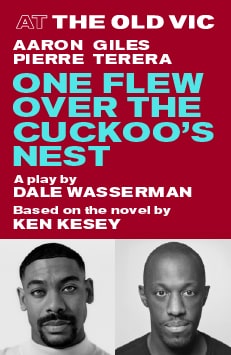
What happens in One Flew Over the Cuckoo's Nest?
The play is set in a psychiatric ward in Oregon. Chief Bromden — half Native American, half white — has been a patient for years. He pretends to be deaf and mute, having learned that invisibility is the best survival strategy in a place designed to suppress dissent. He narrates what we watch.
McMurphy arrives
Randle P. McMurphy is transferred to the ward from a prison farm. He faked mental illness to avoid hard labour, calculating that a psychiatric facility will be easier. He is immediately, disruptively wrong. The ward is run by Nurse Ratched — the Big Nurse — whose control over the patients is total, systematic, and exercised through the mechanisms of therapy, medication, and humiliation. McMurphy has met nothing like her before, and his instinct is to fight.
The ward and its patients
The other patients are a collection of men who have been worn down by the institution until their sense of themselves as autonomous human beings has been largely extinguished. Dale Harding is intelligent and articulate, but has been ground into compliance. Billy Bibbit is crippled by anxiety and shame. Cheswick is bluster without backbone. McMurphy's arrival forces them all to reckon with what they have surrendered — and whether they want it back.
The power struggle
The central dynamic is the contest between McMurphy and Nurse Ratched for the loyalty, attention, and eventually the souls of the other patients. McMurphy uses humour, gambling, a briefly smuggled fishing trip, and sheer force of personality. Ratched uses the institution — its schedules, its medications, its paperwork, its power to extend indefinite commitments. The contest is not equal. McMurphy eventually understands this. The question becomes what he will do with that understanding.
The ending
The play moves toward its conclusion through a sequence of escalations in which McMurphy's victories become Ratched's opportunities for retribution. The final act carries a weight that the comedy of the earlier scenes makes more devastating — the audience has been given reasons to love these people, and then watches what the institution does to them. Chief Bromden, who has been silent throughout, finally acts. His final action is the play's most ambiguous and most hopeful gesture.
Ken Kesey's novel
Ken Kesey published One Flew Over the Cuckoo's Nest in 1962. He wrote it while working night shifts as a ward attendant at a mental health facility in Menlo Park, California — and while participating in CIA-funded experiments with psychedelic drugs at the same hospital. His experience inside a psychiatric institution gave the novel its texture: the routines, the medications, the language of care deployed in the service of control. The book became a central text of the 1960s counterculture, read as an allegory for conformity, institutional power, and the persecution of the non-conforming individual.
The play and the film
Dale Wasserman adapted the novel for the stage in 1963. Kirk Douglas starred in the original Broadway production and owned the film rights for years before eventually selling them to his son Michael, who produced Miloš Forman's 1975 film. Jack Nicholson played McMurphy in the film, which won all five major Academy Awards — Best Picture, Director, Actor, Actress, and Screenplay — and is among the most celebrated American films of the 1970s. The film has largely eclipsed the stage original in cultural memory.
Clint Dyer's approach
Dyer — whose Death of England plays, written with Roy Williams for the National Theatre, were among the most significant pieces of British theatre of the 2020s — has said that he read the novel as being fundamentally about what happens to people who are marked as different by systems of power, and that race is central to that story. Casting two Black actors as McMurphy and Harding is not a neutral decision: it is an argument about who the institution targets, and why. The production is staged in the round because Dyer wants the audience inside the ward rather than watching from outside — implicated in the system, not separated from it.
Matthew Warchus's final season
Matthew Warchus became Artistic Director of The Old Vic in 2015 and has overseen a decade of acclaimed programming that included his own production of Groundhog Day, Simon Stephens's Heisenberg, and a succession of major productions that made the Old Vic one of the most consistently exciting theatres in London. One Flew Over the Cuckoo's Nest is part of his final season before departing the role. It is a characteristic choice: a great American story about the value of the individual against the system, staged in a way that argues for its contemporary relevance.
Performance schedule
- Final performance: 23 May 2026
- Evenings: Monday to Saturday, 7:30pm
- Matinees: Wednesday, Friday and Saturday, 2:30pm
- Running time: Approximately 2 hours 40 minutes, including one interval
The schedule may vary — confirm your specific date when booking. With the final performance on 23 May, advance booking is strongly recommended.
Age guidance and content
Recommended for ages 14 and above. The production deals with themes of institutional control, mental illness, violence, sexual content, and death. It is emotionally demanding and not appropriate for younger audiences.
In the Round
For this production, The Old Vic has transformed its auditorium into an in-the-round configuration — a circular space with the audience on all sides of the action. This is part of the Old Vic's dedicated In The Round season. The staging puts the audience inside the psychiatric ward rather than in front of it. Sightlines differ from the Old Vic's usual configuration — all seats offer a good view, though the in-the-round nature means some seats will have partial obstructions at certain moments.
Cast
- Aaron Pierre as Randle P. McMurphy (Rebel Ridge, Netflix; Mufasa: The Lion King; Star Wars: Starfighter)
- Giles Terera as Dale Harding (Olivier Award winner; Hamilton London — Aaron Burr; Dr. Strangelove; Rosmersholm)
- Olivia Williams as Nurse Ratched (Downton Abbey; An Education; Sixth Sense)
- Arthur Boan as Chief Bromden
- Jason Pennycooke as Martini
- Javone Prince as Cheswick
- Matthew Steer as Dr Spivey
- Samson Ajewole, Kazeem Tosin Amore, Ene Frost, Mo Sesay, Kedar Williams-Stirling
Cast information correct at time of publication and subject to change.
Creative team
- Play by: Dale Wasserman (adapted from the novel by Ken Kesey)
- Director: Clint Dyer
- Set & costume design: Ben Stones
- Lighting design: Chris Davey
- Sound design: Benjamin Grant
- Video design: Gino Ricardo Green
- Movement: Lucie Pankhurst
- Cultural consultant: Nathan Woodward
Access performances
- Captioned: 15 May 2026 (7:30pm) and 16 May 2026 (2:30pm)
- Relaxed: 16 May 2026 (2:30pm)
- Sign Interpreted: 13 May 2026 (7:30pm) and 16 May 2026 (2:30pm)
- Touch Tour: 11 May 2026 (5:30pm) and 16 May 2026 (12pm)
Group discounts
Groups of 10 or more save £10 on price bands A–C. Groups of 20 or more save £15 on price bands A–C. Valid Monday to Wednesday evenings and Wednesday matinees. UK state school groups of 10+ can access Bayliss Circle seats at £16; fee-paying school groups at £21, for the same performances.
Getting there
- Tube/rail: Waterloo (Northern, Jubilee, Bakerloo, Waterloo & City lines, National Rail) — 7 minute walk. Take Mepham Street to Waterloo Road, then turn right; the theatre is 100 metres further on the opposite corner
- Alternative: Southwark (Jubilee line) — 8 minute walk
- Bus: Waterloo Road — routes 1, 4, 26, 59, 68, 139, 168, 171, 172, 176, 188, 521; Mepham Street — routes 211, 243, 507
- Parking: Waterloo Station car park — 4 minute walk
About The Old Vic
The Old Vic is one of London's oldest and most beloved theatres, having operated continuously (except during wartime) since 1818. Located in Waterloo on The Cut, it seats approximately 1,067 and has an exceptional history — Laurence Olivier ran it as the National Theatre home in the 1960s and 70s, and its stages have been home to some of the most celebrated productions in British theatrical history. Kevin Spacey served as Artistic Director from 2004 to 2015, when Matthew Warchus took over and began the decade of programming that concludes with this season.
Accessibility
The Old Vic offers wheelchair-accessible seating, hearing assistance systems, accessible toilets, and step-free access to the auditorium. The in-the-round configuration for this production may affect usual accessibility arrangements — contact the box office in advance to confirm the best options for your visit. See access performance dates above for captioned, relaxed, and signed performances.