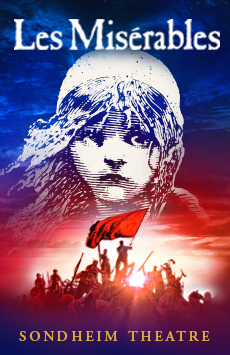
What happens in Les Misérables?
Les Misérables follows Jean Valjean, a French peasant released on parole in 1815 after nineteen years of hard labour for stealing a loaf of bread to feed his sister's starving child. Embittered by injustice and unable to find work, he is taken in by a kindly bishop — and stunned when, after stealing the bishop's silver, he is shown unexpected mercy. The act of grace transforms him.
A new life — and a relentless pursuit
Eight years later, Valjean has reinvented himself as Monsieur Madeleine, a successful factory owner and the mayor of a small town. But when the obsessive police inspector Javert arrives, suspecting that Madeleine is the missing convict 24601, Valjean's old life threatens to catch up with him. Meanwhile, his factory worker Fantine — sacked, destitute, and dying — begs him to look after her young daughter, Cosette, currently in the care of the cruel innkeeper Thénardier and his wife.
Cosette and the rising storm
Valjean rescues Cosette and raises her in secret, fleeing Javert across years and cities. Act Two jumps to 1832, with Cosette grown into a young woman in Paris. The city is in turmoil, students preparing for revolution, and the streets full of unrest. Cosette falls in love with Marius, a young revolutionary — but Marius's friend Éponine, the Thénardiers' daughter, loves Marius from afar.
The barricade
The 1832 Paris Uprising — a real historical event in which students and the urban poor briefly took to the streets — forms the backdrop to the second act. Valjean joins the rebels at the barricade to protect Marius for Cosette's sake, finds himself in a position to kill Javert, and instead spares him — a decision that destroys Javert. The barricade falls. Most of the students die. The revolution achieves nothing immediately and everything in the long run.
Forgiveness and grace
The final scenes follow Valjean to the end of his life, where he is granted a peaceful death surrounded by Cosette, Marius, and the spirits of those who shaped his journey. The show's closing question — "Do you hear the people sing?" — is the same it asks throughout: whether dignity, mercy, and solidarity can survive systems built to deny them. The answer, the show insists, is yes.
How Les Misérables got here
Victor Hugo's novel
Les Misérables is based on Victor Hugo's 1862 novel — a sprawling 1,500-page work of social criticism set against the political turbulence of post-Napoleonic France. The book was an immediate sensation, translated rapidly across Europe, and has remained one of the most widely-read novels in any language. Hugo's argument — that poverty is created by social systems, not by character flaws — runs through the musical adaptation almost intact.
The French original
Composer Claude-Michel Schönberg and writer Alain Boublil first staged Les Misérables in Paris in 1980 as a French-language concept album and a brief stage production at the Palais des Sports. The show ran its scheduled three-month season and closed. It might have ended there — but Cameron Mackintosh heard the recording and saw the potential for a vastly expanded English-language version.
The 1985 Barbican opening
Mackintosh commissioned Herbert Kretzmer to write new English lyrics, partnered with the Royal Shakespeare Company, and gave the production to directors Trevor Nunn and John Caird. The result opened at the Barbican Centre on 8 October 1985. Critical reviews were mixed at first — but audience response was overwhelming, and the show transferred to the Palace Theatre two months later. It has played continuously in the West End ever since.
Broadway, the world, and the film
Les Misérables opened on Broadway in March 1987 and won 8 Tony Awards including Best Musical. It became the first non-English-language musical to win the Tony, and went on to play in 57 countries and 22 languages. Tom Hooper's 2012 film adaptation, produced by Mackintosh and Working Title, won three Oscars and brought the score to a new global audience.
The 2009 reimagined production
To mark the show's 25th anniversary in 2009, Mackintosh commissioned a substantially reimagined production from directors Laurence Connor and James Powell. The original Trevor Nunn / John Caird staging — built around a famous revolving stage — was replaced with a new design by Matt Kinley using Victor Hugo's own paintings as projection material. The reimagined version is now the standard production worldwide.
The Sondheim Theatre and the 40th anniversary
The London production moved from the Palace Theatre to the Queen's Theatre on Shaftesbury Avenue in April 2004. In December 2019, Cameron Mackintosh renamed the Queen's Theatre the Sondheim Theatre in honour of his close friend, the late composer Stephen Sondheim. The 40th anniversary of the London production was marked in October 2025 with a special eight-week season featuring returning Les Mis legends. The show is now in its 41st year.
Performance schedule
- Currently booking until: 13 March 2027
- Evenings: Monday to Saturday, 7:30pm
- Matinees: Thursday and Saturday, 2:30pm
- Running time: Approximately 2 hours 50 minutes, including one interval
Schedule may vary around bank holidays. Confirm specific dates when booking.
Age guidance and content
Recommended for ages 7 and above. Children under 3 are not admitted. Children under 16 must be accompanied by and seated next to a ticketholder aged 18 or over.
The performance contains gunfire, smoke, and flashing light effects. Themes include prostitution, suicide, war, and the death of children — handled seriously but presented honestly. Most children aged 9+ engage with the show without difficulty, though parents of younger children should consider the runtime (just under three hours) as well as the content.
Tickets and pricing
Les Misérables tickets typically range from £30 to £300 depending on the seat and performance date. Premium seats and weekend performances sit at the higher end. The cheapest seats start at £30. Reduced rates of £59.50 (Stalls/Dress Circle up to £100) are available for Monday–Thursday evenings and Thursday matinees from 4 May 2026 onwards. London Theatre Hub recommends booking through LOVEtheatre, our official partner.
Cast (2026)
- Ian McIntosh as Jean Valjean
- Sam Oladeinde as Javert
- Lucie Jones as Fantine (until 11 April 2026)
- Martha Kirby as Fantine (from 13 April 2026)
- Izzi Levine as Cosette
- Jess Folley as Éponine
- Joe Griffiths-Brown as Enjolras
- Thiago Phillip Felizardo as Marius
- Harry Hepple as Thénardier (from 2 February 2026)
- Lizzie Bea as Madame Thénardier (from 2 February 2026)
Cast information correct at time of publication and subject to change. The role of Gavroche is played on a rotation by several child actors. Confirm current cast on the official Les Misérables London website.
Creative team
- Music: Claude-Michel Schönberg
- Lyrics: Herbert Kretzmer (English); Alain Boublil and Jean-Marc Natel (original French)
- Book: Alain Boublil and Claude-Michel Schönberg (based on the novel by Victor Hugo)
- Directors: Laurence Connor and James Powell
- Set and image design: Matt Kinley
- Lighting design: Paule Constable
- Sound design: Mick Potter
- Costume design: Andreane Neofitou and Christine Rowland
- Musical staging: Geoffrey Garratt
- Projection direction: Finn Ross / 59 Productions
- Musical supervisor: Alfonso Casado Trigo
Getting there
- Tube: Piccadilly Circus (Piccadilly, Bakerloo lines) — 3 minute walk
- Alternative: Leicester Square (5 min), Tottenham Court Road (8 min)
- Mainline rail: Charing Cross — 10 minute walk
- Bus: Routes 14, 19, 38 stop nearby
- Parking: Q-Park Chinatown — 5 minute walk
About the Sondheim Theatre
The Sondheim Theatre on Shaftesbury Avenue (formerly the Queen's Theatre) is a Grade II listed building that opened in 1907, with a capacity of around 1,074. It was severely damaged by bombing in the Second World War and substantially rebuilt in the 1950s. Cameron Mackintosh acquired the theatre and undertook a major refurbishment in 2019, reopening it under its new name in honour of his friend Stephen Sondheim. The interior is now one of the most beautifully restored mid-sized auditoriums in the West End, and the acoustics are particularly well-suited to the sung-through Les Misérables score.
Accessibility
The Sondheim Theatre offers wheelchair-accessible seating in the stalls, hearing assistance systems, and accessible toilet facilities. The 2019 refurbishment substantially improved accessibility throughout the building. Audio-described and captioned performances are scheduled periodically; contact the access line in advance for specific dates and to book wheelchair spaces, which are limited.
Producers
The London production is produced by Cameron Mackintosh, who has been a producing partner on the show since 1985 and acquired the rights to the original French version after hearing the concept album. Mackintosh's other long-runners include The Phantom of the Opera, Mary Poppins, and (with Jeffrey Seller) Hamilton in London. He owns the Sondheim Theatre as part of his Delfont Mackintosh portfolio of eight West End theatres.