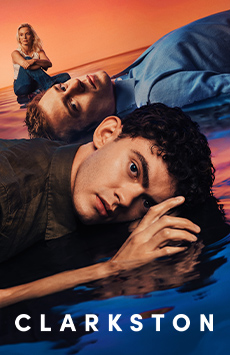
What happens in Clarkston?
Jake, in his early twenties, has flown west from Connecticut. He has just received a serious medical diagnosis and he is doing what a certain kind of young man does when he wants to escape the trajectory his family has been planning for him: he is driving as far away from home as he can. He has taken a job stacking shelves on the night shift at a Costco in Clarkston, Washington — a town of about seven thousand people on the Snake River, named after William Clark of the Lewis and Clark expedition.
Meeting Chris
Chris is the other person on the night shift. He is local, in his twenties, gay, and has never left Clarkston. He lives with his mother Trisha, who is dependent on methamphetamine. He has been turning down the chance to leave town for years, partly out of love for her and partly out of fear. He recognises Jake's quiet, half-articulated despair immediately. They become friends.
The Lewis and Clark conceit
The play's running metaphor is the journey of Meriwether Lewis and William Clark, who passed through this same stretch of the Pacific Northwest in 1805. Chris is fascinated by the expedition; he describes himself and Jake as "the last American pioneers." It is partly a joke about the diminished scale of contemporary American lives, partly genuine: the play asks whether the search for meaning that drove Lewis and Clark west has any contemporary form, or whether it has been reduced to night shifts and Costco breakrooms.
Jake's diagnosis
What Jake has been told he has — and how long he has been told he has it for — is held back until well into the play. When he tells Chris, the moment is delivered without melodrama. The play is interested less in the diagnosis itself than in what it does to Jake's sense of what his remaining time is for. The answer that the play offers is not consoling exactly, but it is honest: time is for connection, and connection sometimes comes from the people you happen to be standing next to in a warehouse at 3am.
Trisha
The play's third major character is Chris's mother. Trisha arrives at the Costco mid-shift, looking for money, looking for Chris, looking for what addiction makes you look for. She is not a villain; she is loved, and she loves back. The play's most affecting scene is the one in which Chris finally tells her that he is leaving with Jake. Whether he actually does leave — and whether Jake makes it through what's coming — the play leaves with characteristic understatement.
How Clarkston came to the West End
Samuel D. Hunter and the Pacific Northwest
Samuel D. Hunter has spent more than fifteen years writing plays set in small towns in the Pacific Northwest, the region he grew up in. His best-known work is The Whale (2012), which Aronofsky adapted into the 2022 film that won Brendan Fraser the Best Actor Oscar. Other notable works include A Case for the Existence of God (winner of the 2022 New York Drama Critics' Circle Award for Best American Play), Greater Clements, Bright Half Life, and his Broadway debut Little Bear Ridge Road in 2025. Clarkston was first staged at Dallas Theater Center in 2015.
Lewiston-Clarkston
Clarkston is the companion piece to Hunter's earlier play Lewiston, set in the small Idaho town across the Snake River from Clarkston, Washington. The two plays share thematic concerns (the lingering myth of Lewis and Clark; the diminished scale of contemporary American lives; the persistence of family) but stand independently. Both plays had an off-Broadway run together at Rattlestick Playwrights Theater in 2018; the productions were widely admired and established Hunter's reputation in New York theatre circles.
Joe Locke's West End debut
Joe Locke's casting was announced in July 2025. Locke was already known to UK audiences from Heartstopper, Netflix's adaptation of Alice Oseman's comic, where he plays Charlie Spring — a role for which he received two Children's & Family Emmy nominations, winning in 2026. He had made his London stage debut in Dawn King's The Trials at the Donmar in 2022, winning Best Professional Debut Performance at the 2023 WhatsOnStage Awards. His Broadway debut as Tobias Ragg in Sweeney Todd followed in 2024. Clarkston was his West End debut.
Jack Serio's direction
Jack Serio is one of the most quietly significant young American directors of the past five years. His off-Broadway production of Uncle Vanya (with a cast including Steve Carell) at a Manhattan loft attracted unusual critical attention; he has since directed Grangeville (Hunter's most recent work) and A Case for the Existence of God. Serio's aesthetic is naturalistic, slow-paced, and trusting of his actors — exactly the approach Hunter's writing demands.
The Trafalgar run
Clarkston opened at the Trafalgar Theatre on Whitehall on 12 September 2025 and closed on 22 November 2025 — a strictly limited season. The production was presented by Oliver Roth and LD Entertainment. The supporting creative team included designer who worked closely with Serio to deliver his characteristic in-the-round staging. No transfer or UK tour has been confirmed. Hunter's profile in the UK continues to rise — A Case for the Existence of God is expected to be programmed in London in due course — and further productions of Clarkston in the UK are likely over time.