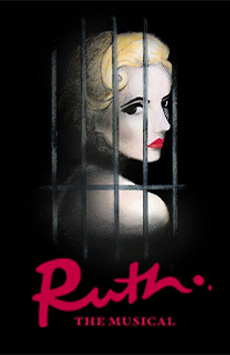
The Story of Ruth Ellis
Ruth traces the final chapter of Ruth Ellis's brief, turbulent life, beginning in London's vice clubs where she worked as a hostess and manager. Born into poverty and shaped by an abusive father, Ruth sought escape through the men who entered her orbit—devoted club owner Desmond Cussen, who offered stability, and volatile racing driver David Blakely, who became her obsession.
A Life Shaped by Trauma
The musical explores Ruth's passionate, destructive relationship with David—marked by violence, jealousy, and mutual dependency. As David's abuse escalates and their affair spirals toward tragedy, Ruth finds herself increasingly isolated, trapped between the respectable life Desmond offers and the dangerous passion that binds her to David.
The Fatal Night
On Easter Sunday 1955, outside the Magdala pub in Hampstead, Ruth shoots David dead with four bullets. The murder shocks conventional Britain, and Ruth's trial becomes a sensation—a peroxide blonde from the wrong side of the tracks who dared to kill an upper-class man. The case exposed deep prejudices about gender, class, and morality in post-war Britain.
The Condemned Cell
In her condemned cell, as execution approaches, a mysterious stranger visits, forcing Ruth to confront her choices, her regrets, and the society that failed to protect her. The musical doesn't excuse Ruth's actions but seeks to understand them, examining the systemic failures and personal tragedies that culminated in those fatal shots and Britain's last execution of a woman.
Themes of Justice and Gender
The musical examines how Ruth's gender, class background, and occupation as a nightclub hostess influenced her trial and sentencing. While male defendants who killed in crimes of passion often received sympathy, Ruth faced harsh judgment. Her execution sparked national debate about capital punishment and contributed to its eventual abolition in Britain.
Who Was Ruth Ellis?
A Brief, Tragic Life
Ruth Ellis was a 28-year-old nightclub hostess who shot and killed her abusive lover, racing driver David Blakely, outside a London pub on Easter Sunday 1955. Her trial became a media sensation, and despite evidence of sustained domestic violence, she was sentenced to death. Ruth's execution on 13 July 1955 sparked national debate about capital punishment and contributed to its eventual abolition in Britain. She remains the last woman executed in the United Kingdom.
The Social Context
1950s Britain was a society rigidly divided by class and defined by strict gender expectations. Women who transgressed moral boundaries—working in nightclubs, having affairs, expressing sexuality openly—faced harsh judgment. Ruth's background as a nightclub hostess, her peroxide blonde hair, and her relationships with multiple men made her an easy target for public condemnation.
The Case That Changed Britain
Ruth Ellis's execution profoundly affected public opinion about capital punishment. Many felt that her sentence was disproportionate, particularly given the evidence of domestic violence she had suffered. The case highlighted how gender and class prejudices influenced the justice system, with working-class women receiving harsher treatment than their male or upper-class counterparts.
Why This Story Matters Today
Seventy years later, Ruth Ellis's case remains relevant. Questions about how society treats women who experience domestic violence, how class and gender influence justice, and what drives someone to violence continue to resonate. This production invites contemporary audiences to reconsider a woman history too often reduces to tabloid headlines, revealing instead someone trapped by circumstance and failed by society.
Performance Schedule
- Tuesday-Saturday: 7:30pm
- Saturday: 2:30pm matinee
- Running Time: 2 hours 20 minutes including interval
Running Dates
Ruth plays at Wilton's Music Hall for a strictly limited 11-day run from 18 to 28 March 2026. Given the brief engagement and the intimate 280-seat venue, advance booking is essential to secure tickets for this powerful and timely production.
Age Guidance & Content Warnings
Recommended for ages 16+
Ruth contains themes of domestic violence, sexual content, strong language, and depicts murder and execution. The production addresses difficult historical realities including abuse, coercive control, and capital punishment. While the staging handles these themes sensitively, the subject matter is intense and may be distressing for some audience members.
Getting There
- Tube: Aldgate East (5-minute walk), Tower Hill (8-minute walk)
- Overground: Shadwell (6-minute walk)
- Buses: Routes 15, 115, 135 stop nearby
- Note: Wilton's is located on a small side street off Cable Street in historic Whitechapel
About Wilton's Music Hall
The world's oldest surviving Grand Music Hall, Wilton's combines Victorian architectural splendor with contemporary theatrical innovation. This atmospheric East End venue provides an intimate, historically resonant setting for powerful storytelling. The 280-seat capacity creates an immersive experience where audiences feel deeply connected to the performance.
Accessibility
Wilton's Music Hall provides wheelchair accessible seating, hearing assistance systems, and accessible facilities. The historic venue has some architectural limitations, but the team works to accommodate all visitors. Contact the box office in advance to discuss specific accessibility requirements and ensure the best possible experience.