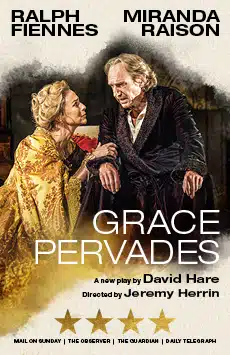
The Story of Grace Pervades
Grace Pervades tells the extraordinary true story of Henry Irving and Ellen Terry, Victorian theatre's greatest stars, whose partnership at the Lyceum Theatre revolutionized British theatre. The play explores their complex personal and professional relationship, the innovations they brought to the stage, and the profound influence of Ellen's children - Edith Craig and Edward Gordon Craig - who continued their mother's theatrical legacy.
Henry Irving: Theatre's First Knight
Henry Irving was a theatrical visionary who elevated acting from a disreputable trade to a respected art form, becoming the first actor ever knighted in 1895. Obsessed with his craft and the Lyceum Theatre, Irving's personal life took a backseat to his artistic ambitions. The play explores how his single-minded dedication to theatre shaped not just his own life but the entire landscape of British performance.
Ellen Terry: The Nation's Darling
Ellen Terry was the most beloved and highest-paid actress in England when Irving recruited her for his Lyceum company. Unlike Irving, Terry balanced her theatrical genius with a rich personal life, including her scandalous status as an unwed mother. The play examines how Terry navigated Victorian society's expectations while maintaining her artistic integrity and creating some of the era's most memorable performances.
An Unprecedented Partnership
When Irving invites Terry to join his company at the Lyceum Theatre, it begins an unprecedented theatrical adventure. Their working relationship was complex - professional respect mixed with possible romantic tension, artistic collaboration tempered by Irving's controlling nature. Together they created productions that set new standards for theatrical excellence and made the Lyceum the premier theatre of its age.
The Next Generation
The play also explores Ellen Terry's remarkable children: Edith Craig, who became a pioneering director and theatrical visionary in her own right, and Edward Gordon Craig, whose revolutionary theories about stage design and theatrical art influenced theatre worldwide. Through them, the legacy of Victorian theatre's golden age extended well into the 20th century.
The Real Henry Irving and Ellen Terry
Henry Irving (1838-1905)
Born John Henry Brodribb, Irving transformed himself into Victorian theatre's greatest actor through sheer determination and theatrical genius. He managed the Lyceum Theatre from 1878 to 1902, creating productions of unprecedented scale and artistic ambition. His interpretations of Shakespeare and contemporary plays set new standards for theatrical performance. In 1895, he became the first actor to receive a knighthood, legitimizing the theatrical profession in ways previously unimaginable.
Ellen Terry (1847-1928)
Ellen Terry began acting as a child and became one of the most celebrated performers of her era. Her beauty, intelligence, and emotional range made her a favorite with audiences and critics alike. She challenged Victorian conventions both on and off stage - her personal life included three marriages and relationships that scandalized society, yet her professional reputation remained unassailable. She was also a gifted writer, and her correspondence with George Bernard Shaw remains a treasure of theatrical history.
The Lyceum Theatre Partnership
From 1878 to 1902, Irving and Terry's partnership at the Lyceum Theatre produced some of the most acclaimed productions in theatrical history. Their Shakespeare productions were particularly celebrated, with Irving's Hamlet, Macbeth, and Iago, and Terry's Portia, Beatrice, and Lady Macbeth becoming definitive interpretations. The Lyceum became the center of London's theatrical life, and their productions toured internationally, bringing British theatre to worldwide acclaim.
Edith and Edward Gordon Craig
Ellen Terry's daughter Edith Craig (1869-1947) became a groundbreaking theatre director and a pioneer of the women's suffrage movement. Her brother Edward Gordon Craig (1872-1966) revolutionized theatrical design with his theories about lighting, staging, and the "über-marionette." Both children carried their mother's theatrical legacy into the modern era, influencing 20th-century theatre in profound ways.
Practical Information
Show Times
- Monday - Saturday: 7:30pm
- Wednesday & Saturday: 2:30pm matinees
- Sunday: No performances
Getting There
- Underground: Piccadilly Circus (2 mins walk), Leicester Square (5 mins walk)
- Train: Charing Cross (8 mins walk)
- Buses: Multiple routes to Piccadilly Circus and Haymarket
- Parking: Q-Park Trafalgar Square, NCP Leicester Square
Theatre Information
- Historic West End theatre opened in 1821
- One of London's most beautiful and intimate venues
- Capacity: 888 seats across 4 levels
- Excellent sightlines throughout
- Wheelchair accessible seating available
- Hearing assistance systems available
- Bar and refreshments
Running Dates
Grace Pervades runs at the Theatre Royal Haymarket from 24 April 2026 to 11 July 2026. This is a strictly limited engagement following its acclaimed premiere at Theatre Royal Bath - book early to secure your seats for this theatrical event.
Age Guidance
Recommended for ages 12+. Under 5s cannot be admitted to the theatre. Children aged 15 or under must be accompanied by an adult. The play deals with adult themes including complex relationships, theatrical ambition, and Victorian social mores, making it most suitable for teenagers and adults who appreciate sophisticated drama and historical stories.