
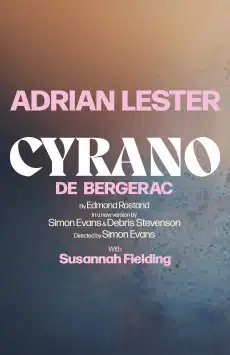
Expert Review: Rostand's Romantic Masterpiece Gloriously Reimagined
The Verdict
Cyrano de Bergerac endures because its central wound — the gap between how we see ourselves and how we wish to be seen — is permanently human. This RSC production starring Adrian Lester brings fresh urgency to Rostand's verse, balancing swashbuckling bravado with genuine heartbreak throughout. The famous balcony scene retains its full power to silence an audience completely, and Lester's performance as the brilliant, long-nosed poet-swordsman who woos Roxane through another man's lips is a career-defining piece of work.
What Makes It Special
- Adrian Lester as Cyrano: One of the RSC's most acclaimed productions in years, with Lester bringing both the physical comedy and the devastating emotional interior of this most complex of romantic heroes to extraordinary life.
- Rostand's Immortal Text: First performed in 1897 and never out of fashion, Cyrano de Bergerac speaks to every person who has ever felt unworthy of love, who has hidden behind wit when vulnerability was required. Its continued resonance is entirely earned.
- RSC Production Values: The Royal Shakespeare Company brings its customary combination of classical rigour and theatrical imagination, creating a production that honours the play's verse while making it feel urgently alive.
- The Balcony Scene: Among the greatest scenes in all of world theatre — Cyrano feeding Christian the words to win Roxane's heart while his own goes unacknowledged in the darkness. In this production it achieves the rare feat of being simultaneously funny, thrilling, and heartbreaking.
Perfect For
Lovers of classic theatre and romantic drama; fans of Adrian Lester seeking a definitive West End performance; audiences who appreciate poetic language delivered with precision and passion; and anyone who has ever loved someone from a distance and lacked the courage to say so. Cyrano de Bergerac is the most human of plays — it belongs to everyone.
Everything You Need to Know
About Cyrano de Bergerac
Cyrano de Bergerac is a brilliant soldier, poet, and duellist — witty, courageous, and almost impossibly gifted. He is also deeply in love with his cousin Roxane. But Cyrano is convinced that his extraordinarily large nose makes him unworthy of her love, so he directs his passion into words — specifically, into the letters and speeches of the handsome but inarticulate Christian, who loves Roxane too. The result is one of theatre's most celebrated triangles: a woman who falls in love with a soul expressed through another man's face.
The Central Irony
Rostand's genius lies in the impossible position he creates. Roxane falls genuinely in love with Cyrano's words, his soul — but she believes she is loving Christian. Cyrano gets everything he wants except acknowledgement. The play's final act, set fifteen years later, resolves this irony with a devastating revelation that ensures Cyrano de Bergerac ends as one of theatre's great tragedies despite its swashbuckling comedy.
Adrian Lester's Cyrano
Adrian Lester brings to Cyrano a combination of physical virtuosity, verbal precision, and emotional depth that makes this production exceptional. His verse-speaking is masterful — the famous tirade on his nose in Act One is simultaneously hilarious and quietly devastating, establishing the character's particular mixture of bravado and self-laceration that sustains the entire play. The RSC has found in Lester a Cyrano for a new generation.
The RSC Approach
The Royal Shakespeare Company's approach to this West End transfer brings together a creative team committed to honouring Rostand's verse while making the production accessible to contemporary audiences. The design evokes seventeenth-century Paris with theatricality rather than literalism, allowing the language — sharp, witty, and endlessly quotable — to remain at the centre of the experience.
Performance Schedule
- Dates: TBC 2026 — check LOVEtheatre for announcements
- Evenings: Monday–Saturday, 7:30pm
- Matinees: Wednesday & Saturday, 2:30pm
- Running Time: Approximately 2 hours 45 minutes including interval
Getting There
- Tube: Leicester Square (Northern & Piccadilly lines) — 3 minute walk
- Alternative: Charing Cross (5 min walk), Covent Garden (7 min walk)
- Bus: Routes 24, 29, 176 stop on Charing Cross Road
- Parking: Q-Park Theatreland on Whitcomb Street
Age Guidance
Recommended for ages 12+. Cyrano de Bergerac contains duelling and stylised stage combat, and themes of unrequited love, self-deception, and mortality. The play's verse and emotional complexity make it most rewarding for audiences 12 and above. The production is an excellent introduction to classical theatre for older children and teenagers.
Noël Coward Theatre
One of the West End's most elegant mid-sized venues, the Noël Coward Theatre seats 966 across stalls, dress circle, and upper circle. Built in 1903 and named after its most celebrated former resident, the theatre offers excellent sightlines and a warm acoustic perfectly suited to verse drama. Recent productions include The Importance of Being Earnest and various major transfers.
Booking Information
Tickets from approximately £18. Dates for the 2026 run are yet to be confirmed; check LOVEtheatre regularly for updates and booking information. RSC productions at the Noël Coward Theatre typically sell out quickly once booking opens.
⭐⭐⭐⭐⭐ Full Expert Review
Adrian Lester's Cyrano de Bergerac is a performance of such complete inhabitation that it becomes impossible to imagine the role belonging to anyone else. From the moment he launches into the famous tirade on his nose — turning humiliation into a performance of spectacular verbal dexterity — Lester establishes a Cyrano who is simultaneously the wittiest and most wounded man in any room he enters.
The Language: Rostand's verse is the production's greatest asset and its greatest challenge. The RSC's approach prioritises clarity without sacrificing poetry — every speech lands with precision, the wit registering before the sadness that underlies it. The translation captures both the comedy of Cyrano's predicament and the genuine anguish that his bravado is designed to conceal.
The Balcony Scene: The production's centrepiece delivers everything the play demands and then some. Cyrano feeding Christian his lines while Roxane falls in love with words she believes are Christian's — while Cyrano himself stands in the shadows receiving love intended for another — is staged with a formal elegance that makes the emotional geometry entirely clear. When Roxane says she loves the soul behind the words, the audience knows before she does that she is loving Cyrano.
The Final Act: The RSC's production handles the fifteen-year time jump and Cyrano's dying revelation with great delicacy. The temptation to over-sentimentalise is resisted — instead the scene is played with a quiet precision that makes Roxane's realisation, and Cyrano's final defiance of death, land with devastating force. Several audience members were openly weeping.
Design and Production: The set evokes seventeenth-century Paris with a combination of warm lighting and flexible staging that allows rapid transitions between the play's varied locations — from the theatre of the Hôtel de Bourgogne to the battlefield of Arras to the convent garden where the final scene unfolds. The costume design is sumptuous without being distracting.
Final Verdict: Cyrano de Bergerac in the hands of the RSC and Adrian Lester is essential West End theatre. It is funny, heartbreaking, beautifully spoken, and utterly true about the human tendency to hide love behind performance. Do not miss it.
Rating: 4.8/5 Stars