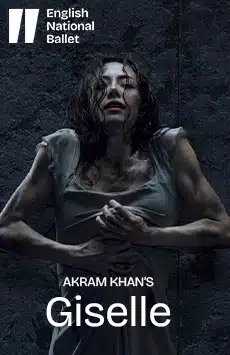
The Story of Giselle Reimagined
In Akram Khan's bold reimagining, Giselle is part of the Outcasts - a community of migrant garment factory workers dispossessed of their jobs and separated by a towering wall from the wealthy Landlords who exploit them. The Outcasts function as little more than exotic entertainment for those who have destroyed their livelihoods. Into this divided world comes Albrecht, a wealthy Landlord who disguises himself as an Outcast to be with Giselle, whom he loves.
Act I: Love and Betrayal
Albrecht's presence among the Outcasts is noted by Hilarion, a shape-changing "fixer" who trades with the Landlords for his community's survival and harbors his own feelings for Giselle. When the Landlords unexpectedly arrive, Albrecht tries to hide but Giselle sees his fiancée Bathilde among them - and recognizes the fine dress Bathilde wears as the product of her own factory labor. The revelation of Albrecht's deception and his return to Bathilde and his privileged world drives Giselle mad with grief. The Landlords give a command, the Outcasts encircle Giselle, and when the crowd disperses, her lifeless body is revealed.
Act II: The Wilis' Vengeance
A wrecked, abandoned "ghost" factory is revealed - a place where Giselle and her female co-workers labored, and many died. Here Albrecht, grieving, confronts and condemns the Landlords. Myrtha, Queen of the Wilis (ghosts of factory workers who seek revenge for the wrongs done to them in life), enters and summons Giselle from death to join the company of remorseless Wilis. When Hilarion comes to mourn at Giselle's grave, the Wilis punish him fatally for his complicity with the Landlords.
Can Love Survive Death?
Albrecht returns and faces the Wilis' vengeance. They command Giselle to dance him to his death, but her love for him persists beyond the grave. In a heartbreaking pas de deux, she tries to save him even as the Wilis demand retribution. As dawn breaks and the Wilis must depart, the question remains: what price has been paid for Albrecht's betrayal, and what does redemption look like in a world defined by exploitation and injustice?
Khan's Revolutionary Vision
The Fusion of Dance Traditions
Akram Khan trained in kathak, one of the nine major forms of Indian classical dance, before learning contemporary dance. For Giselle, he braids contractions, spirals, and the intricate, quickfire footwork of kathak with classical ballet vocabulary to create a rich weave of styles. The effect is mesmerizing - movement that feels both ancient and urgently contemporary. In Act II, Khan uses pointe work for the first time, reserving it for the supernatural Wilis to convey their otherworldly, floating, spiritual nature.
From Medieval Village to Modern Injustice
The original 1841 Giselle took place during a wine festival in medieval Rhineland, with Giselle as a peasant girl betrayed by a disguised duke. Khan roots his version in contemporary realities - migrant workers, factory closures, economic exploitation, the literal walls that divide privileged from dispossessed. This isn't updating for its own sake; it's finding the timeless human truths in the story and showing how they manifest today.
Tim Yip's Towering Design
Oscar-winner Tim Yip (Crouching Tiger, Hidden Dragon) created a set dominated by a massive wall that physically divides the stage, representing the barriers between worlds. The transformation from Act I's oppressive factory setting to Act II's haunted ruin creates stunning visual metaphors. Mark Henderson's atmospheric lighting conjures shadows and ghosts with precision, while costumes suggest both the uniformity of worker exploitation and the individuals who resist it.
Global Phenomenon
Since its 2016 premiere at Manchester International Festival, Akram Khan's Giselle has been seen by over 156,000 people in 17 cities across 11 countries. Critics universally hail it as a masterpiece - "a triumph" (Evening Standard), "sensational" (The Stage), "staggeringly beautiful and utterly devastating" (Sunday Express). The production has been filmed and is available on Ballet on Demand, but experiencing it live with English National Ballet Philharmonic performing the score is incomparable.
Practical Information
Show Times
- Thursday 15 January: 7:30pm
- Friday 16 January: 2:00pm (schools), 7:30pm
- Saturday 17 January: 2:30pm (audio-described), 7:30pm
- Sunday 18 January: 2:30pm
Access Performances
- Audio-Described: Saturday 17 January at 2:30pm (with Touch Tour at 12:30pm for visually impaired patrons)
- Schools Performance: Friday 16 January at 2:00pm
Getting There
- Underground: Leicester Square (2 mins walk - Northern & Piccadilly lines)
- Alternative: Charing Cross (5 mins), Covent Garden (7 mins)
- Train: Charing Cross Station (5 mins walk)
- Buses: Multiple routes to St Martin's Lane
Theatre Information
- London's largest theatre with 2,359 seats
- Stunning Edwardian architecture
- Excellent sightlines throughout
- Fully accessible venue
- Audio described performances available
- Touch tours for visually impaired patrons
- Bars and refreshments on multiple levels
Running Dates
Akram Khan's Giselle plays at the London Coliseum for just four days - 15 to 18 January 2026. This is a strictly limited run celebrating the production's 10th anniversary. English National Ballet performs with live orchestra (English National Ballet Philharmonic).
Age Guidance & Pricing
Recommended for ages 10+. Under 5s are not permitted in the auditorium. Tickets start from £15, making world-class ballet accessible to all. Children under 16 go half-price: up to two under-16s per full-price adult ticket. The production explores themes of exploitation, displacement, and death with sophistication that older children and adults will appreciate most fully.