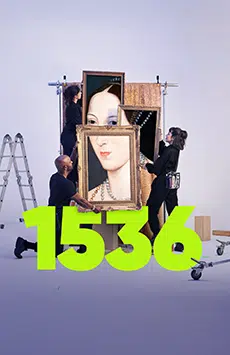
What Happens in 1536?
Three women in rural Tudor England—Anna, Jane, and Mariella—hurry to their childhood meeting place, desperate for gossip from London. They're unmarried in a society where marriage determines survival, where women exist as property exchanged between fathers and husbands. Their conversations mix genuine friendship with the competitive anxiety of women trapped in impossible circumstances.
News From Court
Word spreads of escalating conflict between King Henry VIII and his Queen, Anne Boleyn. The court drama fascinates these rural women—partly as entertainment, partly as warning. Anne's fall demonstrates how quickly female power evaporates, how accusations of sexual misconduct destroy women regardless of truth. The women discuss the rumors with a mixture of schadenfreude and recognition.
Parallels Closer to Home
As royal scandal unfolds in London, another rumor begins circulating locally. The women start recognizing unsettling parallels between Anne Boleyn's situation and their own rural lives—how gossip operates, how accusations spread, how women become scapegoats for male violence and political maneuver. What seemed distant court intrigue suddenly feels dangerously close.
The Tide of Violence
The play examines how violence against women functions systematically—not as isolated incidents but as structural oppression that crosses class boundaries. Whether you're a queen or a rural nobody, female bodies serve as battlegrounds for male power struggles. The women must navigate gossip, accusation, and threat while maintaining the facade of female friendship.
Questions of Solidarity
1536 asks whether female solidarity can survive in systems designed to make women compete for male approval and protection. Can friendship withstand the pressure to save yourself by sacrificing others? The play explores complicity, survival, and the impossible choices women face in patriarchal societies—then and now.
Why 1536?
Anne Boleyn's Execution
1536 marks the year Henry VIII executed Anne Boleyn, his second wife, on charges of adultery, incest, and treason—accusations historians widely consider fabricated. Anne's fall demonstrates how Tudor power structures operated: when Henry wanted to remarry, court machinery manufactured evidence justifying Anne's destruction. Her execution on May 19, 1536 shocked Europe and marked a turning point in Henry's reign.
Gender and Power in Tudor England
Tudor women existed within strict hierarchies determining their worth entirely through relationships to men—as daughters, wives, mothers. Even queens held power only through male approval. Anne Boleyn's rise and fall exemplifies this precarity: she became queen because Henry desired her, died when he no longer did. For common women, vulnerability intensified exponentially.
The Role of Gossip
In 1536, rumor and reputation determined life and death. Without modern communication, gossip spread through networks both powerful and dangerous. For women especially, sexual reputation meant everything—accusations of unchastity, whether true or false, could destroy lives. The play examines how gossip functions as social control, particularly targeting female sexuality.
Contemporary Parallels
Ava Pickett wrote 1536 responding to contemporary violence against women—the endless news stories of harassment, abuse, and murder that society treats as inevitable rather than systemically produced. The play suggests that misogyny operates remarkably consistently across centuries, that the mechanisms destroying Anne Boleyn remain operational today, adapted but fundamentally unchanged.
Ava Pickett's Inspiration
As Pickett explains, the play emerged from "the never-ending stories in the news about violence against women." Rather than locating misogyny safely in the past, 1536 argues that historical distance allows audiences to see patterns still shaping contemporary life. The Tudor setting provides perspective on present-day power structures that might otherwise seem natural or inevitable.
Performance Schedule
- Previews begin: 2 May 2026
- Final Performance: 1 August 2026
- Evenings: Monday-Saturday, 7:30pm
- Matinees: Wednesday & Saturday, 2:30pm
- Running Time: Approximately 2 hours including interval
Limited Summer Engagement
1536 plays a strictly limited 13-week West End season following its sold-out Almeida Theatre run. Given critical acclaim, multiple awards, and the production's cult following from its premiere, advance booking is strongly recommended. Tickets went on sale Tuesday, 19 November 2025.
Age Guidance & Content Warnings
Recommended for ages 14+
1536 contains references to violence against women, sexual assault, and themes of misogyny and patriarchal control. While staging handles these subjects thoughtfully, the content addresses difficult historical and contemporary realities. The play's dark comedy balances serious themes but doesn't diminish their weight. Parents should consider content carefully when bringing younger teenagers.
Cast to Be Announced
The original Almeida Theatre production starred Tanya Reynolds (Sex Education), Liv Hill (Black Mirror, The Serpent Queen), and BAFTA-nominated Siena Kelly (Adult Material) as the three women. West End casting will be announced in due course, with producer Sonia Friedman committed to maintaining the production's ensemble excellence.
Getting There
- Tube: Leicester Square (Northern, Piccadilly lines) - 2 minute walk
- Alternative tubes: Covent Garden (5 mins), Charing Cross (5 mins)
- Buses: Routes 14, 19, 24, 29, 38, 176 stop nearby
- Parking: Q-Park Theatreland (Whitcomb Street)
Ambassadors Theatre
This intimate West End venue seats 444 across three levels, offering excellent sightlines throughout. Built in 1913, the Ambassadors maintains Edwardian charm while providing modern technical capabilities. The theatre's intimate scale perfectly suits 1536's intense character work and emotional proximity. Recent productions include Paranormal Activity and the long-running Stomp.
Accessibility
The Ambassadors Theatre offers wheelchair accessible seating, hearing assistance systems, and accessible restroom facilities. Due to the building's historic structure, some areas require stair navigation. Contact the box office to discuss specific accessibility requirements and ensure optimal seating arrangements for your needs.
Production Team
1536 is produced in the West End by Sonia Friedman Productions (Prima Facie, Harry Potter and the Cursed Child), Annapurna Theatre, and the Almeida Theatre. The collaboration brings together commercial West End expertise with the artistic vision that made the original production so successful.